
Introduction
A CNC turning machine is one of the most important tools in modern manufacturing, used to produce highly accurate cylindrical and rotational components. CNC (Computer Numerical Control) technology automates the turning process, allowing manufacturers to create complex parts with exceptional precision, consistency, and efficiency.
Industries such as automotive, aerospace, medical, railway, oil & gas, electronics, and industrial machinery rely on CNC turning machines to manufacture critical components. Many of these components are initially produced by a Metal Casting Manufacturer before undergoing precision CNC turning operations for enhanced dimensional accuracy.
Key Takeaways
- CNC turning machines are used to manufacture cylindrical and rotational components.
- The CNC turning process uses computer-controlled technology for high precision.
- CNC turning offers excellent accuracy, repeatability, and productivity.
- Multiple turning operations can be performed on a single machine.
- CNC turning is widely used across automotive, aerospace, medical, and industrial sectors.
What is a CNC Turning Machine?
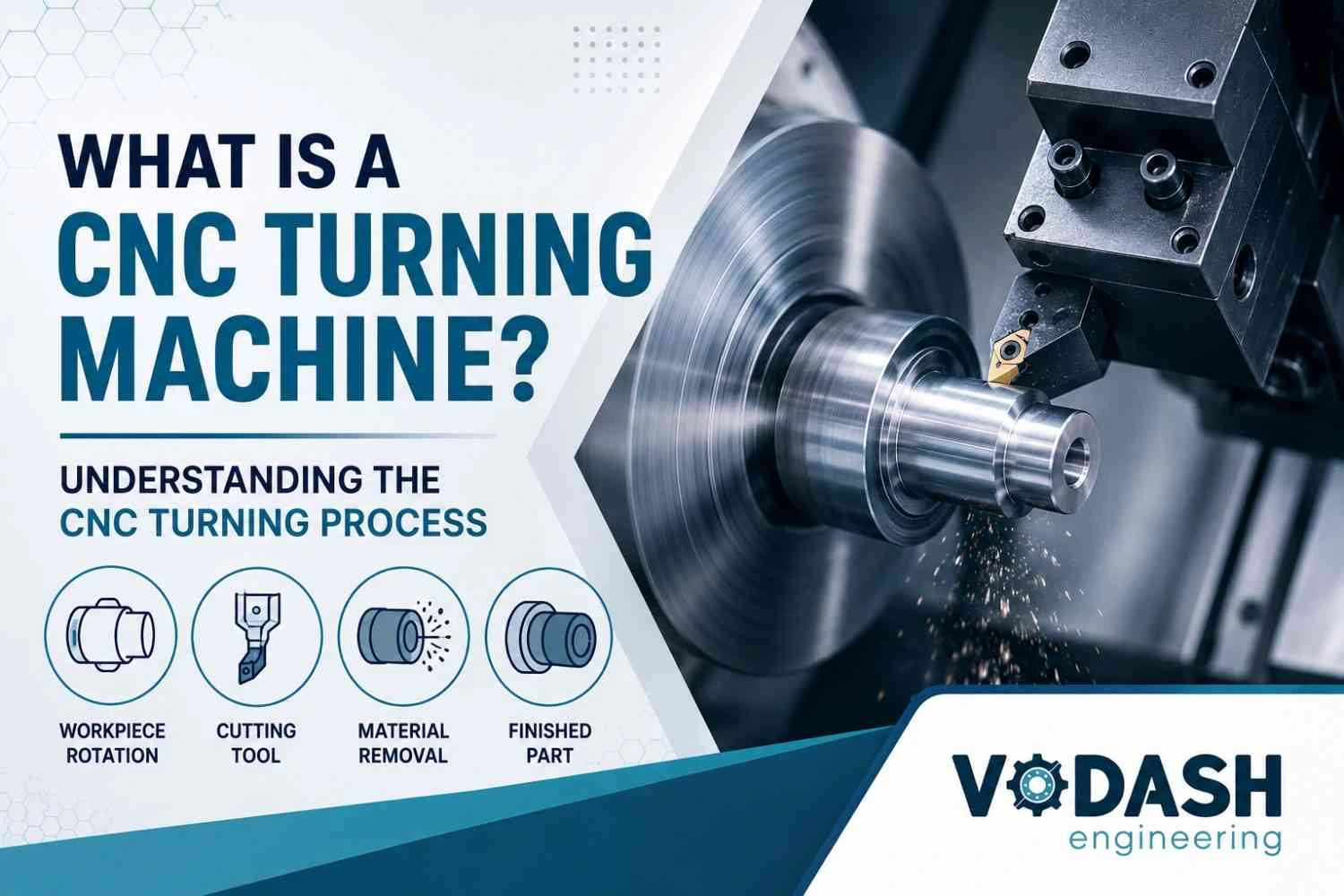
A CNC turning machine is a computer-controlled machine tool that rotates a workpiece while a cutting tool removes material to create the desired shape and dimensions.
Unlike conventional lathes, CNC turning machines operate through programmed instructions, allowing precise control over cutting speed, tool movement, and machining operations.
Key Features of CNC Turning Machines
- High precision machining
- Automated operation
- Excellent repeatability
- Tight tolerance control
- Faster production cycles
- Consistent product quality
What is the CNC Turning Process?
The CNC turning process involves rotating the workpiece at high speed while a stationary cutting tool removes material to achieve the required dimensions and surface finish.
The process is ideal for manufacturing round, cylindrical, and symmetrical components.
Step-by-Step CNC Turning Process
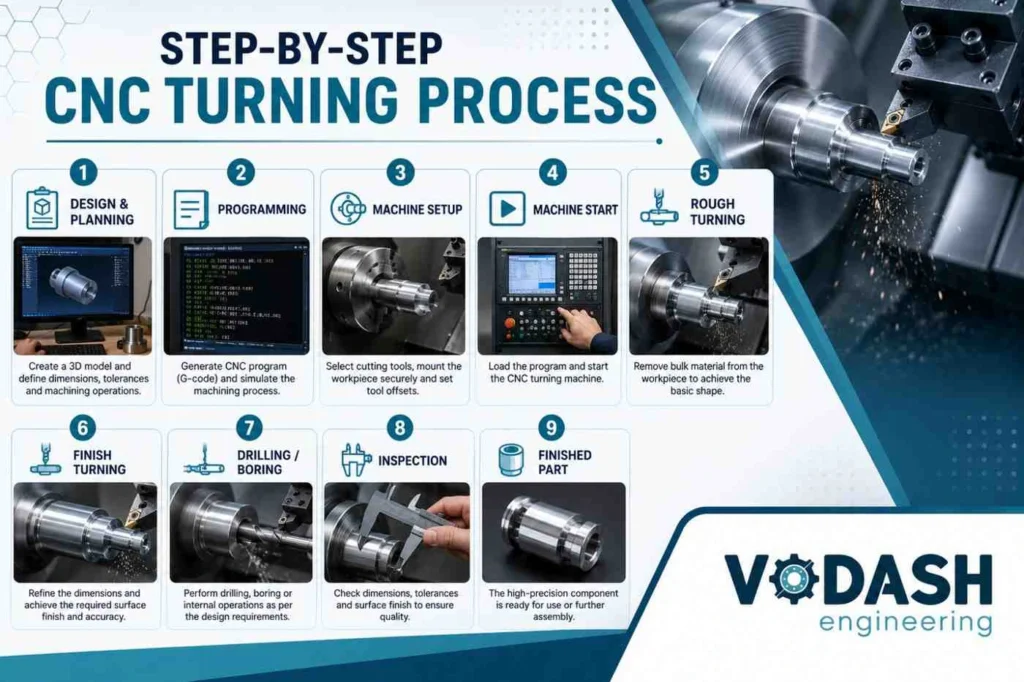
1. CAD Design Creation
Engineers create a digital model of the component using CAD software.
2. CNC Programming
The design is converted into machine instructions using CAM software and G-code programming.
3. Machine Setup
The raw material and cutting tools are securely mounted on the CNC turning machine. In many industrial applications, components produced through the Metal Casting Process serve as the base material for CNC turning and finishing operations.
4. Turning Operation
The workpiece rotates while the cutting tool removes excess material according to the programmed path.
5. Finishing Operations
Additional operations may be performed to improve dimensional accuracy and surface quality.
6. Quality Inspection
The finished component undergoes inspection and testing to ensure compliance with specifications.
Common CNC Turning Operations
Modern CNC turning machines can perform multiple machining operations.
Popular CNC Turning Processes
- Straight Turning
- Taper Turning
- Facing
- Grooving
- Thread Cutting
- Boring
- Drilling
- Knurling
- Parting-Off
Components Manufactured Using CNC Turning
CNC turning is widely used to manufacture precision-engineered parts.
Common Products
- Shafts
- Bushings
- Pins
- Couplings
- Valve Components
- Hydraulic Fittings
- Fasteners
- Bearing Housings
Materials Used in CNC Turning
CNC turning machines can process a variety of materials depending on application requirements.
Common Materials
- Stainless Steel
- Carbon Steel
- Alloy Steel
- Aluminum
- Brass
- Copper
- Titanium
- Engineering Plastics
Advantages of CNC Turning Machines
CNC turning offers several benefits compared to traditional machining methods.
Key Benefits
- High dimensional accuracy
- Superior surface finish
- Faster production speed
- Reduced human error
- Excellent repeatability
- Lower production waste
- Suitable for high-volume production
- Cost-effective manufacturing
Industries That Use CNC Turning
Many industries depend on CNC turning for precision component manufacturing.
Major Industries
- Automotive
- Aerospace
- Medical Equipment
- Railway
- Oil & Gas
- Electronics
- Industrial Machinery
- Defense Manufacturing
CNC Turning vs Conventional Turning
| Feature | CNC Turning | Conventional Turning |
| Accuracy | Very High | Moderate |
| Automation | Fully Automated | Manual |
| Repeatability | Excellent | Limited |
| Production Speed | Fast | Slower |
| Human Error | Minimal | Higher |
| Complex Designs | Easy | Difficult |
Modern Advancements in CNC Turning Technology
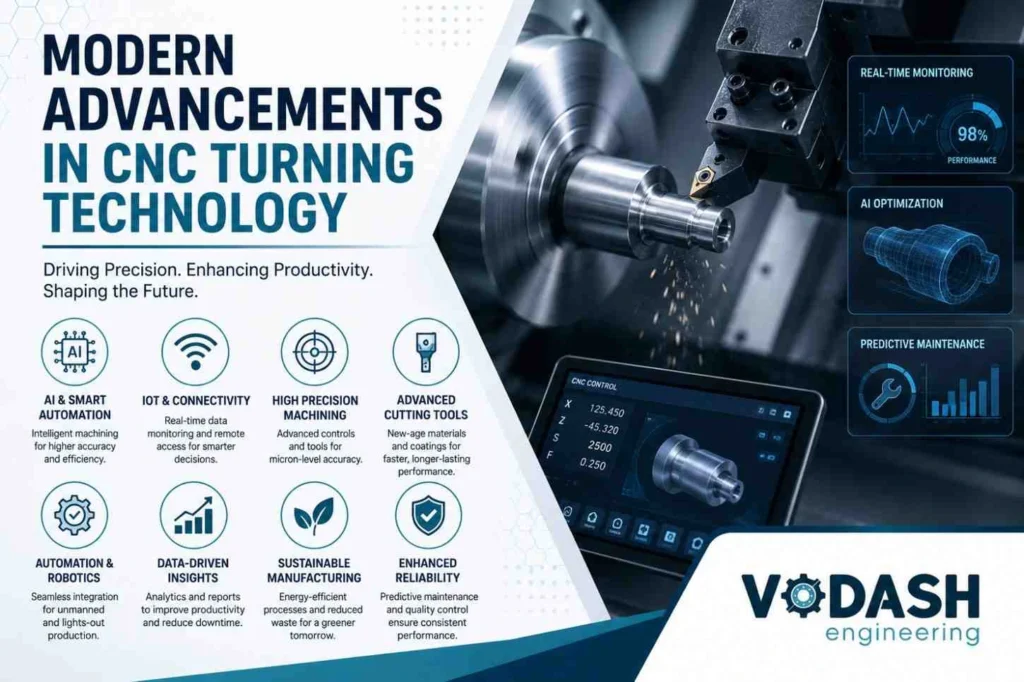
The CNC turning industry continues to evolve with advanced manufacturing innovations.
Emerging Trends
- Multi-axis CNC turning centers
- AI-powered machining systems
- Robotic automation
- Smart factory integration
- Real-time machine monitoring
- Predictive maintenance systems
These technologies improve efficiency, reduce downtime, and enhance manufacturing quality.
Conclusion
A CNC turning machine is a critical manufacturing tool used to produce highly accurate cylindrical and rotational components for various industries. The CNC turning process combines advanced automation, precision machining, and quality control to deliver consistent and reliable results.
As industries continue to demand tighter tolerances and higher production efficiency, CNC turning technology remains an essential solution for manufacturing durable, high-performance components. With ongoing advancements in automation and smart manufacturing, CNC turning is set to play an even greater role in the future of precision engineering.
Also Read : https://vodashcasting.com/blog/cnc-milling-vs-cnc-turning/
FAQs
1. What is a CNC turning machine?
A CNC turning machine is a computer-controlled machine that rotates a workpiece while cutting tools remove material to create precise cylindrical components.
2. What is the CNC turning process?
The CNC turning process involves rotating a workpiece and removing material using programmed cutting tools to achieve specific dimensions and surface finishes.
3. What products are commonly made using CNC turning?
Common products include shafts, bushings, pins, couplings, valve parts, hydraulic fittings, and bearing housings.
4. What materials can be machined using CNC turning?
CNC turning can machine stainless steel, carbon steel, aluminum, brass, copper, titanium, alloy steel, and engineering plastics.
5. What are the advantages of CNC turning?
CNC turning provides high accuracy, superior surface finish, fast production, reduced waste, excellent repeatability, and cost-effective manufacturing.