
Introduction
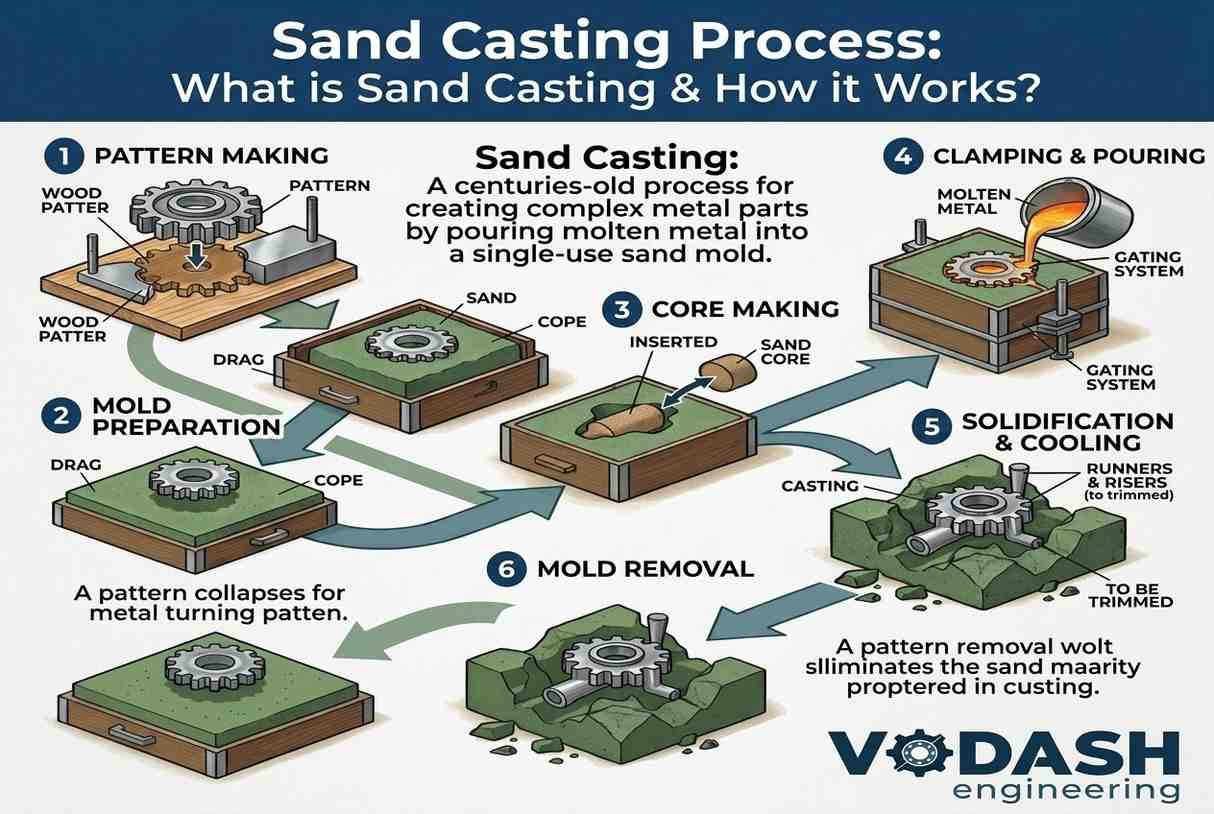
In modern manufacturing, simplicity often drives efficiency. One of the best examples of this is the sand casting process, a method that has been used for centuries and still powers today’s industrial production.
At Vodash Engineering, sand casting remains a core technique for producing durable and complex metal components across industries. But what exactly is sand casting, and why is it still so widely used?
In this guide, we’ll break down what is sand casting, explain how sand casting works, and explore its advantages, applications, and limitations in a practical, easy-to-understand way.
Key Takeaways
- Sand Casting is a traditional yet highly effective casting method
- It uses sand molds to shape molten metal into complex forms
- Ideal for large, heavy, and custom components
- Cost-effective compared to other casting methods
- Requires finishing for improved surface quality
What is Sand Casting?
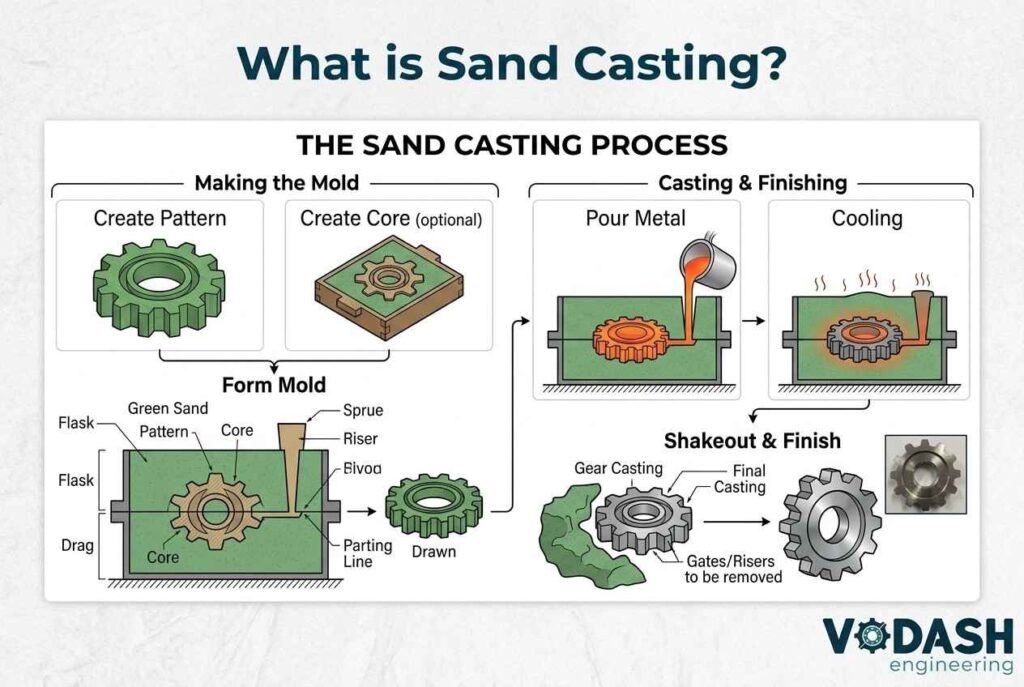
Sand Casting is a traditional metal casting process used by sand casting manufacturers where molten metal is poured into a mold made from sand. Once the metal cools and solidifies, the mold is broken away to reveal the final product.
The reason sand is used is simple, it’s affordable, heat-resistant, and flexible enough to create molds of almost any shape.
This method is widely used for manufacturing parts that are:
- Large in size
- Complex in design
- Required in small to medium production volumes
From engine blocks to heavy machinery components, sand casting continues to be one of the most reliable casting techniques.
How Does Sand Casting Work?
Understanding the sand casting process becomes easier when you break it down step by step.
1. Pattern Creation
Everything starts with a pattern, a replica of the final product. This pattern is usually made from wood, plastic, or metal and is used to shape the mold cavity.
2. Mold Preparation
A mixture of sand, binder, and moisture is packed around the pattern. Once the pattern is removed, it leaves behind a hollow cavity that defines the shape of the part.
3. Core Making (If Required)
For parts with internal cavities or hollow sections, cores are placed inside the mold. These cores ensure that the internal geometry is formed correctly.
4. Pouring Molten Metal
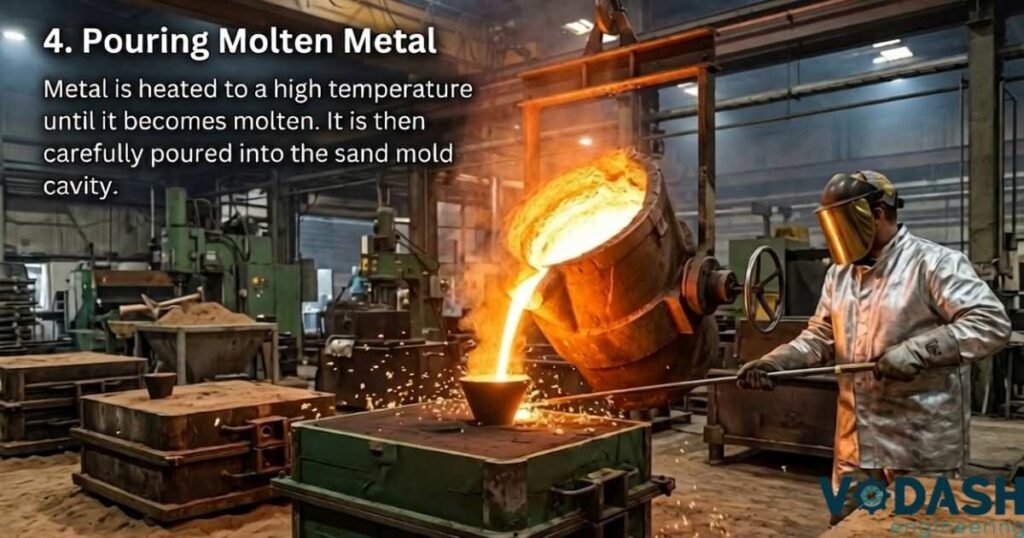
Metal is heated to a high temperature until it becomes molten. It is then carefully poured into the sand mold cavity.
Common metals used include:
- Iron
- Aluminum
- Steel
5. Cooling & Solidification
Once poured, the molten metal begins to cool and harden. This stage is critical, as improper cooling can lead to defects.
6. Shakeout & Finishing
After solidification, the sand mold is broken apart. The raw casting is then cleaned, trimmed, and sometimes machined to achieve the desired finish.
Conclusion
The sand casting process remains one of the most dependable and widely used manufacturing techniques. Its simplicity, affordability, and versatility make it an essential part of modern engineering.
Whether you’re producing heavy machinery parts or custom metal components, sand casting offers a practical and scalable solution.
At Vodash Engineering, we combine traditional casting expertise with modern Precision Machining Services to deliver high-quality, tailored solutions.
Also Read: https://vodashcasting.com/blog/application-metal-casting/
FAQs
1. What is sand casting used for?
Sand Casting is used to produce large, complex metal parts like engine blocks, machine components, and industrial equipment.
2. What materials are used in sand casting?
Common materials include iron, aluminum, steel, and bronze.
3. Is sand casting expensive?
No, it is one of the most cost-effective casting methods, especially for large parts.
4. What are the advantages of sand casting?
It offers flexibility, low cost, and the ability to create complex shapes.
5. How accurate is the sand casting process?
It is less precise than die or investment casting services but suitable for many industrial applications.