
Introduction
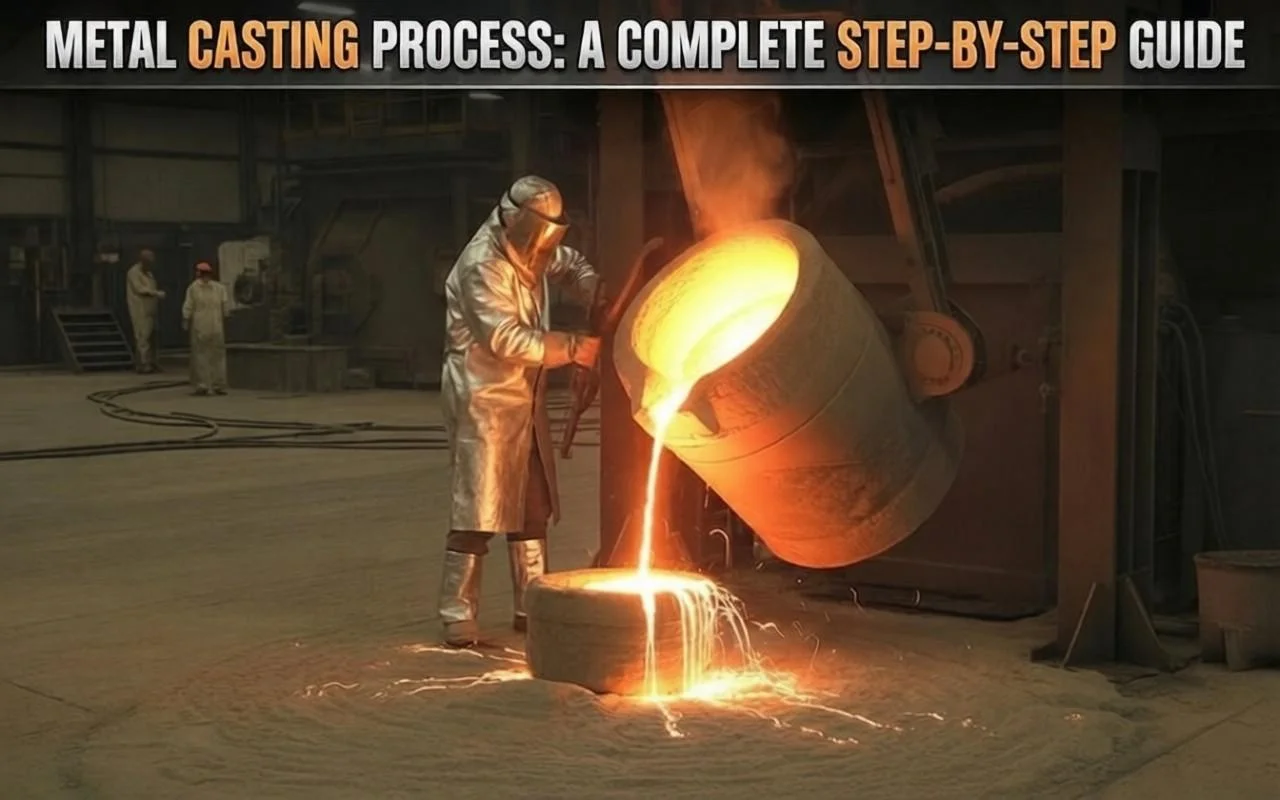
Metal casting is the manufacturing process in which molten metal is poured into a mold and produces components. It forms complex components from metal. The metal casting process includes the main steps from pattern design to solidification and finishing.
You must understand the process for quality production. Many metal casting manufacturer follow these structured processes to deliver durable and accurate metal castings for different industrial applications. In this blog, we tell you the comprehensive metal casting process, which includes the main steps.
Key Takeaways
- Metal Casting is a manufacturing process where molten metal is poured into a mold to create precise components.
- The process includes pattern making, mold preparation, melting, pouring, cooling, cleaning, and inspection.
- Proper control at each stage helps reduce defects and ensures high-quality output.
- Understanding the metal casting process helps manufacturers produce durable and accurate parts for various industries.
What is Metal Casting?
Metal Casting is one of the oldest and most reliable manufacturing processes used to create complex metal components. In this method, molten metal is poured into a specially designed mold cavity, where it cools and solidifies into the desired shape.
This process is widely used in industries such as automotive, construction, aerospace, and heavy machinery because it allows manufacturers to produce intricate designs with excellent strength and durability.
Step-by-Step Metal Casting Process
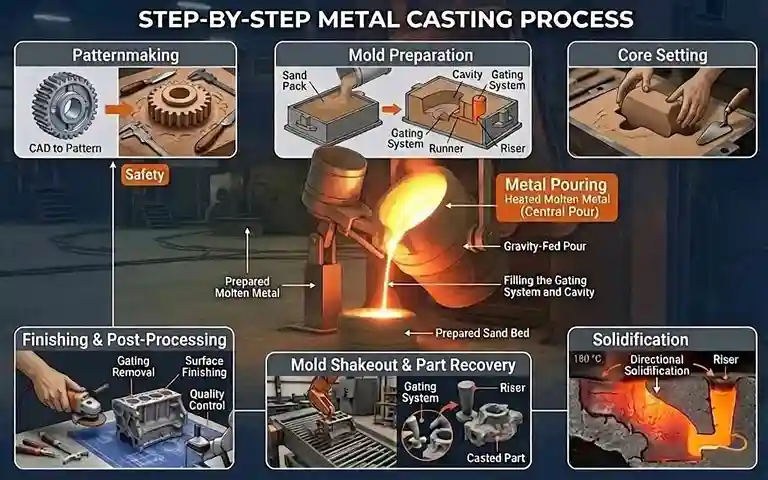
Understanding the metal casting process steps is essential for achieving consistent quality and precision. Below is a detailed breakdown of each stage:
1. Pattern Creation
The process begins with creating a pattern, which is a replica of the final product. Patterns are slightly larger than the final component to account for shrinkage during cooling.
They can be made from materials like wood, plastic, or metal, depending on production volume and complexity.
2. Mold Preparation
Next, the pattern is used to create a mold cavity. The mold acts as a container that shapes the molten metal.
- Sand, metal, or ceramic materials are commonly used
- Cores are added for hollow or complex internal shapes
- Proper mold design ensures accurate dimensions and smooth surfaces
3. Melting the Metal
In this stage, the selected metal or alloy is heated in a furnace until it reaches a molten state.
Common furnaces include:
- Induction furnaces
- Electric arc furnaces
- Cupola furnaces
During melting:
- Impurities are removed
- Alloy composition is adjusted
- Temperature is carefully controlled
This step is crucial for achieving the desired mechanical properties and avoiding defects like porosity.
4. Pouring the Molten Metal
Once the metal reaches the correct temperature, it is poured into the prepared mold.
- Pouring must be controlled and steady
- Automated systems or robotic arms are often used in modern foundries
- Proper techniques prevent air pockets and uneven filling
5. Cooling and Solidification
After pouring, the molten metal begins to cool and solidify inside the mold.
This stage determines:
- Strength and durability
- Internal structure (microstructure)
- Dimensional stability
Proper cooling control helps minimize shrinkage, internal stress, and cracking. In some cases, heat treatment is applied to enhance material properties.
Want consistent quality with minimal defects? Vodash Engineering uses controlled cooling and advanced techniques to ensure superior casting results.
6. Shakeout and Mold Removal
Once solidified, the casting is removed from the mold. This process is known as shakeout.
- Sand molds are broken using vibration
- Permanent molds are opened mechanically
- Cores are removed carefully
Recyclable materials like sand are often reused to improve sustainability.
7. Cleaning and Fettling
The raw casting usually contains excess material such as sprues, risers, and flash.
Cleaning and fettling include:
- Cutting or grinding unwanted sections
- Sandblasting for surface cleaning
- Chemical or thermal treatments for complex parts
This step ensures the casting is ready for inspection and further use.
8. Inspection and Quality Control
Quality inspection is essential before the casting is approved.
Common inspection methods include:
- Visual inspection
- Dimensional checks
- Non-destructive testing (NDT)
- Mechanical property testing
This ensures the final product meets industry standards and customer requirements.
9. Final Delivery or Assembly
After passing inspection, the finished casting is either:
- Delivered directly to the customer
- Used in larger assemblies or further machining processes
Why Choose Vodash Engineering for Metal Casting?
At Vodash Engineering, we combine expertise, technology, and quality control to deliver reliable metal casting solutions.
Here’s what sets us apart:
- Experienced Team: Skilled professionals handling every stage of production
- Advanced Infrastructure: Modern foundry equipped with the latest technology
- Custom Manufacturing: Tailored solutions based on your requirements
- Sustainable Practices: Eco-friendly processes to reduce environmental impact
- Strict Quality Control: Thorough inspection and testing for consistent results
Conclusion
The metal casting process is a precise and structured method that transforms molten metal into high-performance components. From pattern creation to final inspection, every step plays a critical role in ensuring quality, durability, and accuracy.
By understanding these processes, manufacturers can choose the right casting method, improve production efficiency, and deliver components that meet demanding industrial standards.
Start your metal casting project with Vodash Engineering, contact us today.
Also Read: https://vodashcasting.com/blog/different-types-of-casting-processes/
FAQs
1. What is the metal casting process?
Metal casting is a manufacturing technique where molten metal is poured into a mold, cooled, and solidified to create a specific shape.
2. What are the main steps in metal casting?
The key steps include pattern creation, mold preparation, melting, pouring, cooling, mold removal, cleaning, and inspection.
3. Which metals are commonly used in casting?
Common metals include aluminum, iron, steel, copper, brass, and magnesium. The choice depends on the application and required properties.
4. What are common defects in metal casting?
Typical defects include shrinkage cavities, porosity, cracks, cold shuts, and surface imperfections. These can be minimized with proper process control.
5. How do you choose the right casting method?
The right method depends on factors such as material type, part complexity, surface finish, production volume, and budget.