
Introduction
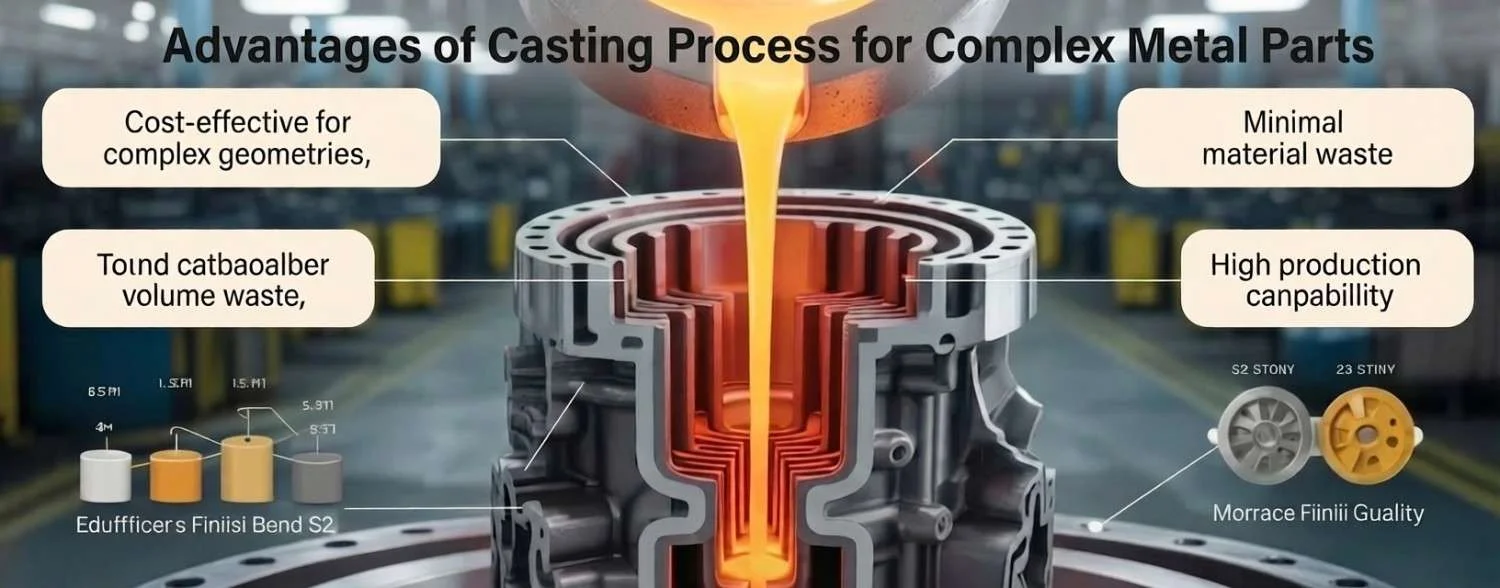
Casting is a highly efficient manufacturing process used to produce complex metal components with precision and durability. By pouring molten metal into molds, manufacturers can create intricate shapes, internal cavities, and detailed geometries that are difficult to achieve with traditional machining or forging services methods.
Due to its versatility, cost-effectiveness, and ability to support high-volume production, the casting process is widely used across industries such as automotive, aerospace, construction, and heavy engineering. In this blog, we explore the key advantages of the casting process and why it remains the preferred choice for manufacturing complex metal parts.
Key Takeaways
- Casting enables the production of complex and intricate metal components
- It is cost-effective and ideal for high-volume manufacturing
- Supports a wide range of metals and alloys
- Reduces the need for assembly and machining
- Offers excellent surface finish and dimensional accuracy
- Promotes sustainable and efficient production
What is Casting?
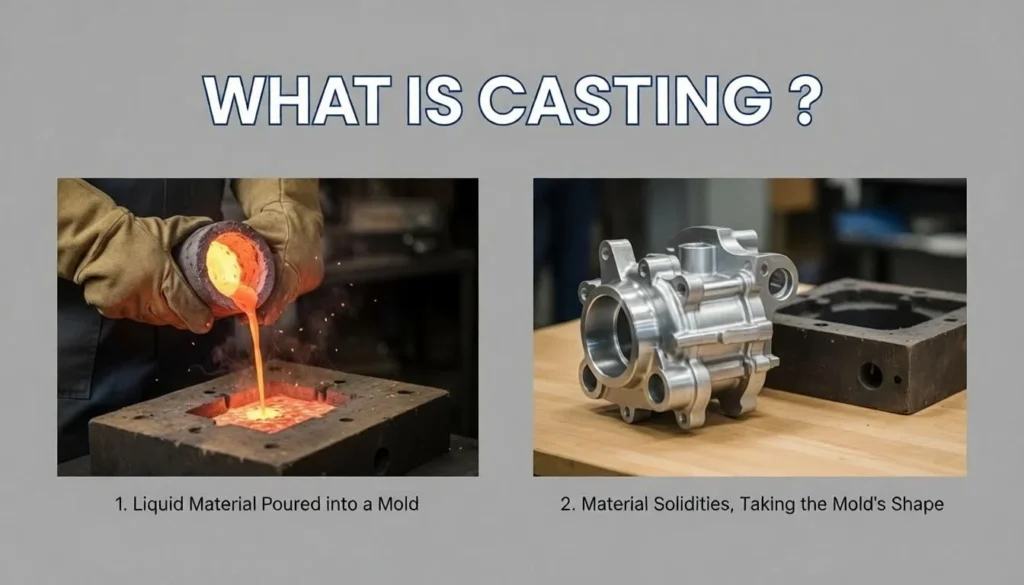
Casting is a manufacturing process in which molten metal is poured into a mold cavity and allowed to solidify into a specific shape. Once cooled, the solidified part is removed, cleaned, and finished as required.
This process is especially useful for producing parts with complex geometries, internal cavities, and detailed designs.
Advantages of the Casting Process
The advantages of casting process make it one of the most reliable methods for producing complex metal components. Below are the key benefits:
1. Ability to Produce Complex Shapes
Casting allows manufacturers to create highly complex geometries, including internal cavities, undercuts, and hollow sections. These features are difficult or expensive to achieve using other manufacturing methods.
2. Cost-Effective for Large Production
The casting process is highly economical, especially for high-volume production. Once the mold is prepared, identical components can be produced repeatedly with minimal additional cost.
3. Versatility in Material Selection
Across different types of casting processes, industries can work with a wide range of materials to produce components that meet specific performance and application needs. Casting supports a wide range of materials, including:
- Aluminum
- Steel
- Iron
- Copper alloys
- Magnesium
This flexibility allows manufacturers to choose materials based on strength, corrosion resistance, and application requirements.
4. High Production Efficiency of Casting Proccess
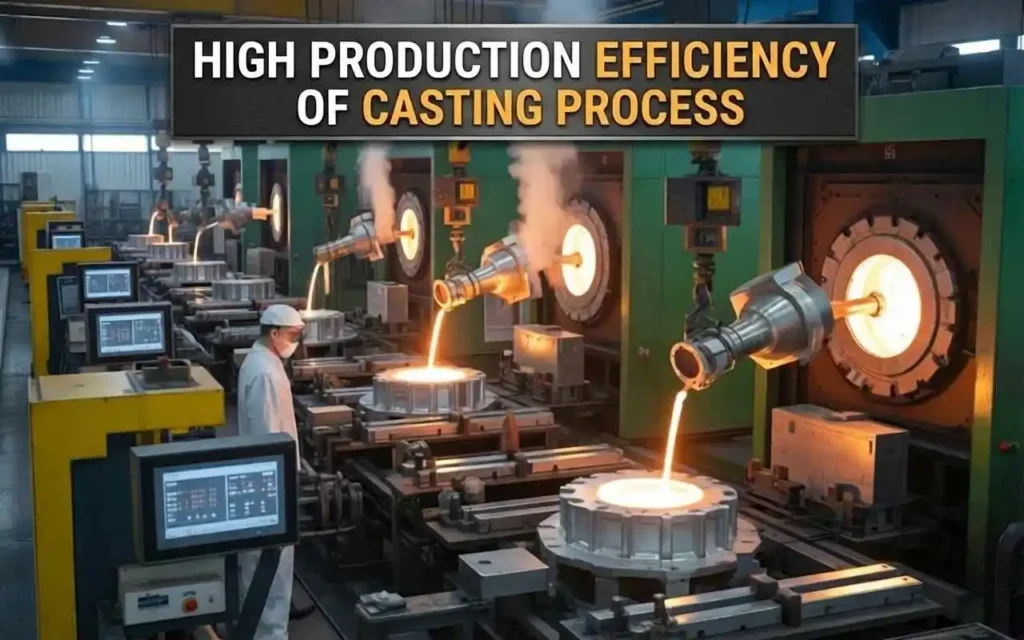
Casting processes such as die casting and permanent mold casting enable fast and repeatable production. This makes it ideal for industries that require consistent quality in large quantities.
5. Excellent Mechanical Properties
With proper process control and post-casting treatments like heat treatment, cast components can achieve high strength, durability, and structural integrity.
6. Reduced Need for Assembly
Casting can integrate multiple features into a single component, reducing the need for welding or assembly. This not only saves time but also improves structural strength by minimizing joints.
7. Superior Surface Finish and Accuracy
Modern casting methods provide excellent surface finish and dimensional accuracy. This reduces the need for additional machining and lowers overall production costs.
Need high-precision cast components with smooth finishes? Get in touch with Vodash Engineering today.
8. Design Flexibility
Casting gives engineers the freedom to design complex and optimized components. It supports innovation in lightweight structures, improved functionality, and material efficiency.
9. Sustainable Manufacturing Process
Casting contributes to sustainability by:
- Reducing material waste
- Using recyclable metals
- Supporting reusable molds in some processes
This makes it an environmentally friendly manufacturing option.
Why Choose Vodash Engineering?
Vodash Engineering is a trusted metal casting manufacturer in Rajkot, India, offering high-quality non-ferrous casting solutions for industrial applications.
Our focus on quality manufacturing and precision metal casting process that helps deliver durable, high-performance components for industrial and engineering applications.
Our strengths include:
- Expertise in aluminum and zinc casting
- Advanced manufacturing and finishing processes
- Custom solutions for specific project needs
- Strong focus on quality through advanced Precision Machining Services.
- Reliable delivery for industrial clients
Conclusion
The casting process offers numerous advantages for manufacturing complex metal parts, from design flexibility and material versatility to cost efficiency and high production capability. Its ability to produce durable and intricate components makes it a preferred choice across multiple industries.
By combining advanced casting techniques with proper quality control, manufacturers can achieve consistent performance, reduce costs, and support sustainable production.
Also Read: https://vodashcasting.com/blog/10-advantages-of-investment-casting/
FAQs
1. Why is casting suitable for complex metal components?
Casting allows the production of intricate shapes, internal cavities, and detailed structures that are difficult to achieve with other manufacturing methods.
2. How does casting reduce manufacturing costs?
It produces parts close to their final shape, reducing material waste, machining time, and assembly costs.
3. Which metals are commonly used in casting?
Common materials include aluminum, steel, iron, copper, and magnesium, depending on application requirements.
4. Can casting improve mechanical properties?
Yes, through controlled solidification, alloying, and heat treatment, casting can enhance strength and durability.
5. How does casting support high-volume production?
Casting allows repeatable production using the same mold, making it efficient and cost-effective for large-scale manufacturing.