
Introduction
In modern manufacturing, achieving high precision and superior surface quality is essential for producing reliable components. A CNC grinding machine plays a crucial role in this process by using computer-controlled technology to perform accurate and repeatable grinding operations.
From automotive and aerospace parts to industrial tools and dies, CNC grinding machines play a vital role in finishing components produced by a metal casting manufacturer, helping maintain tight tolerances and excellent surface finishes.
In this guide, you’ll learn what a CNC grinding machine is, how it works, and the important CNC grinding machine table dimensions and specifications you should know before selecting one for your application.
Key Takeaways
- A CNC grinding machine is used for high-precision finishing operations.
- It removes material using a computer-controlled abrasive wheel.
- CNC grinders are widely used in automotive, aerospace, tooling, and medical industries.
- CNC grinding machine table dimensions typically range from 400 × 200 mm to 1000 × 500 mm.
- Key specifications include grinding capacity, wheel size, table load, spindle speed, and positioning accuracy.
- Choosing the right machine depends on workpiece size, production volume, and required precision.
What Is a CNC Grinding Machine?
A CNC grinding machine (Computer Numerical Control grinding machine) is an essential part of the precision machining process, removing very small amounts of material from a workpiece to achieve high dimensional accuracy and an excellent surface finish.
Unlike conventional grinding machines, CNC grinders operate through programmed instructions, allowing automatic and repeatable grinding operations with minimal human intervention.
These machines are widely used in industries where tight tolerances and smooth finishes are essential, such as automotive, aerospace, tool manufacturing, medical equipment, and precision engineering.
How Does a CNC Grinding Machine Work?
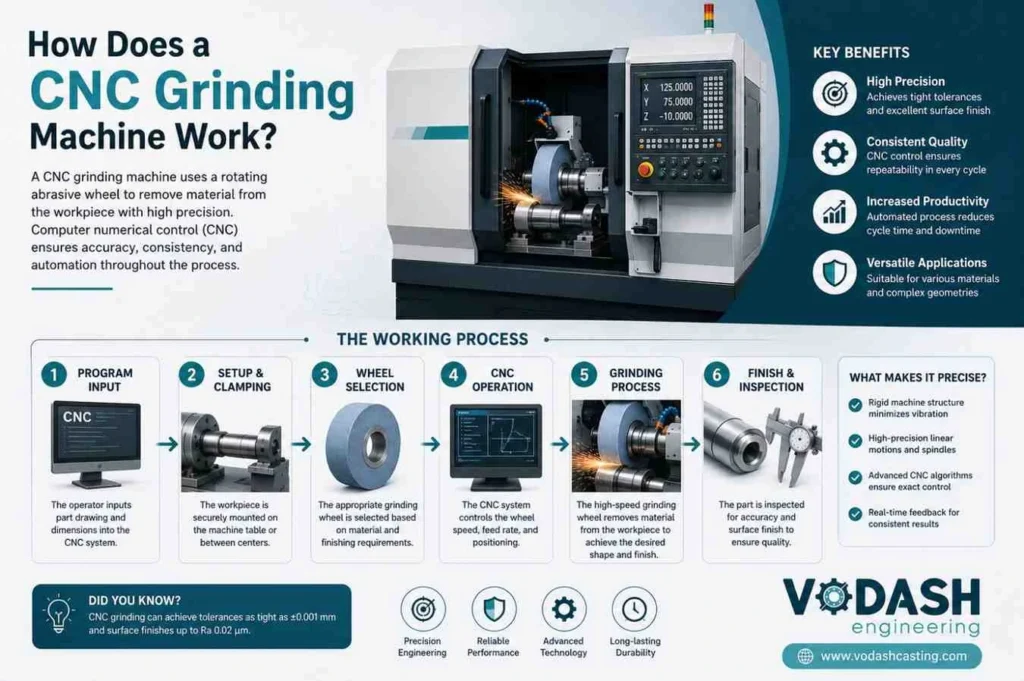
A CNC grinding machine uses a rotating abrasive wheel controlled by a computerized system. The machine moves the workpiece and grinding wheel along programmed axes to remove material accurately.
Basic Working Process:
- Load the workpiece onto the machine table.
- Set the grinding program through the CNC controller.
- The grinding wheel rotates at high speed.
- The machine automatically performs the grinding cycle.
- The finished component is inspected for dimensional accuracy.
This automation ensures consistent quality and reduces production time.
Common Applications of CNC Grinding Machines
CNC grinding machines are widely used for manufacturing and finishing precision components, making them an essential technology for precision machining parts manufacturers serving industries that demand exceptional accuracy.
Industries That Use CNC Grinding:
- Automotive components
- Aerospace parts
- Dies and molds
- Cutting tools
- Hydraulic components
- Medical instruments
- Industrial machinery parts
Typical Components Ground by CNC Machines:
- Shafts
- Gears
- Bearings
- Spindles
- Rollers
- Machine tool parts
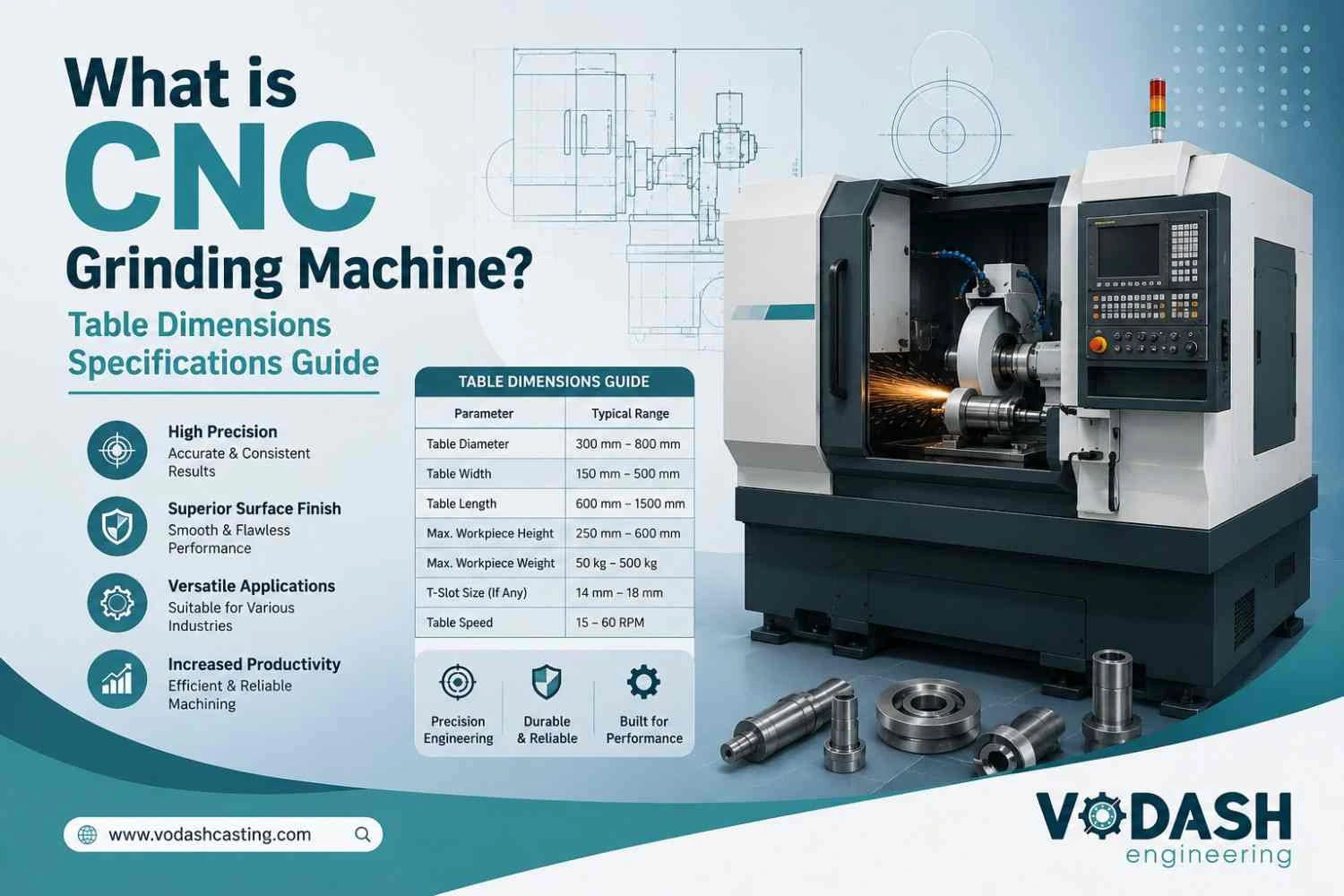
CNC Grinding Machine Table Dimensions Specifications
The table dimensions of a CNC grinding machine determine the maximum workpiece size it can handle. Different models offer different capacities depending on the application.
Standard CNC Grinding Machine Table Dimensions
| Machine Type | Typical Table Size |
| Small CNC Surface Grinder | 400 × 200 mm |
| Medium CNC Surface Grinder | 600 × 300 mm |
| Large CNC Surface Grinder | 800 × 400 mm |
| Heavy-Duty CNC Grinder | 1000 × 500 mm or larger |
Typical CNC Grinding Machine Specifications
| Specification | Typical Range |
| Table Size | 400 × 200 mm to 1000 × 500 mm |
| Maximum Grinding Length | 400–1000 mm |
| Maximum Grinding Width | 200–500 mm |
| Maximum Workpiece Height | 250–450 mm |
| Grinding Wheel Diameter | 250–400 mm |
| Table Load Capacity | 150–500 kg |
| CNC Axes | 2 to 5 Axes |
| Positioning Accuracy | ±0.002 mm to ±0.005 mm |
| Surface Finish | Up to Ra 0.2 µm |
| Spindle Speed | 1400–3600 RPM |
Advantages of Using a CNC Grinding Machine
Modern CNC grinding machines provide several benefits over manual grinding systems.
Key Benefits:
- High dimensional accuracy
- Excellent surface finish
- Fully automated operation
- Reduced production errors
- Consistent quality across batches
- Faster machining cycles
- Lower labor requirements
- Suitable for complex component profiles
Factors to Consider Before Choosing a CNC Grinding Machine
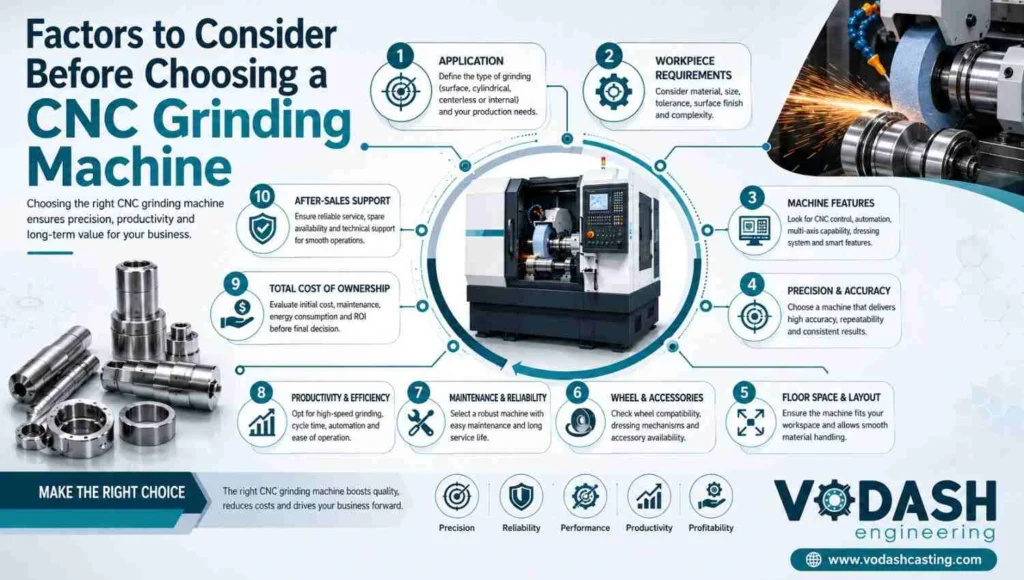
Selecting the right machine depends on your production requirements.
Important Factors:
- Required table dimensions
- Maximum workpiece size
- Material type
- Grinding wheel capacity
- CNC controller features
- Production volume
- Accuracy requirements
- Maintenance and service support
Choosing the correct specifications helps improve productivity and reduce operating costs.
Why Table Dimensions Matter
The machine table acts as the platform that holds the workpiece securely during grinding.
A larger table allows manufacturers to process bigger components, while smaller tables are ideal for compact precision parts.
Benefits of Proper Table Size Selection:
- Better workpiece stability
- Higher machining accuracy
- Reduced setup time
- Improved production efficiency
- Capability to handle larger jobs
Conclusion
A CNC grinding machine is one of the most important precision manufacturing tools for producing components with tight tolerances and superior surface quality. Understanding CNC grinding machine table dimensions and specifications helps manufacturers choose the right equipment for their production needs.
Whether you are machining automotive parts, tools, dies, or industrial components, selecting a CNC grinding machine with the appropriate table size, grinding capacity, and accuracy can significantly improve efficiency and product quality.
Also Read : https://vodashcasting.com/blog/what-is-cnc-milling-machine-used-for/
FAQs
1. What is a CNC grinding machine used for?
A CNC grinding machine is used to achieve high dimensional accuracy and smooth surface finishes on metal and engineered components.
2. What are the standard CNC grinding machine table dimensions?
Most CNC grinding machines have table sizes ranging from 400 × 200 mm for smaller models to 1000 × 500 mm or larger for heavy-duty applications.
3. Which industries commonly use CNC grinding machines?
Automotive, aerospace, medical, tool manufacturing, hydraulic, and industrial machinery sectors commonly use CNC grinding machines.
4. What is the typical accuracy of a CNC grinding machine?
Most modern CNC grinding machines offer positioning accuracy between ±0.002 mm and ±0.005 mm, depending on the machine model.
5. Why are table dimensions important in a CNC grinding machine?
Table dimensions determine the maximum workpiece size the machine can accommodate and directly affect machining stability, precision, and productivity.