
Introduction
When it comes to metal manufacturing, few processes are as time-tested and versatile as sand casting. At Vodash Engineering, we’ve seen firsthand how this traditional method continues to power modern industries, from automotive to heavy machinery. But like any manufacturing technique, sand casting comes with its own set of strengths and limitations.
If you’re planning a project or comparing casting methods, understanding the advantages and disadvantages of sand casting can help you make the right call.
Key Takeaways
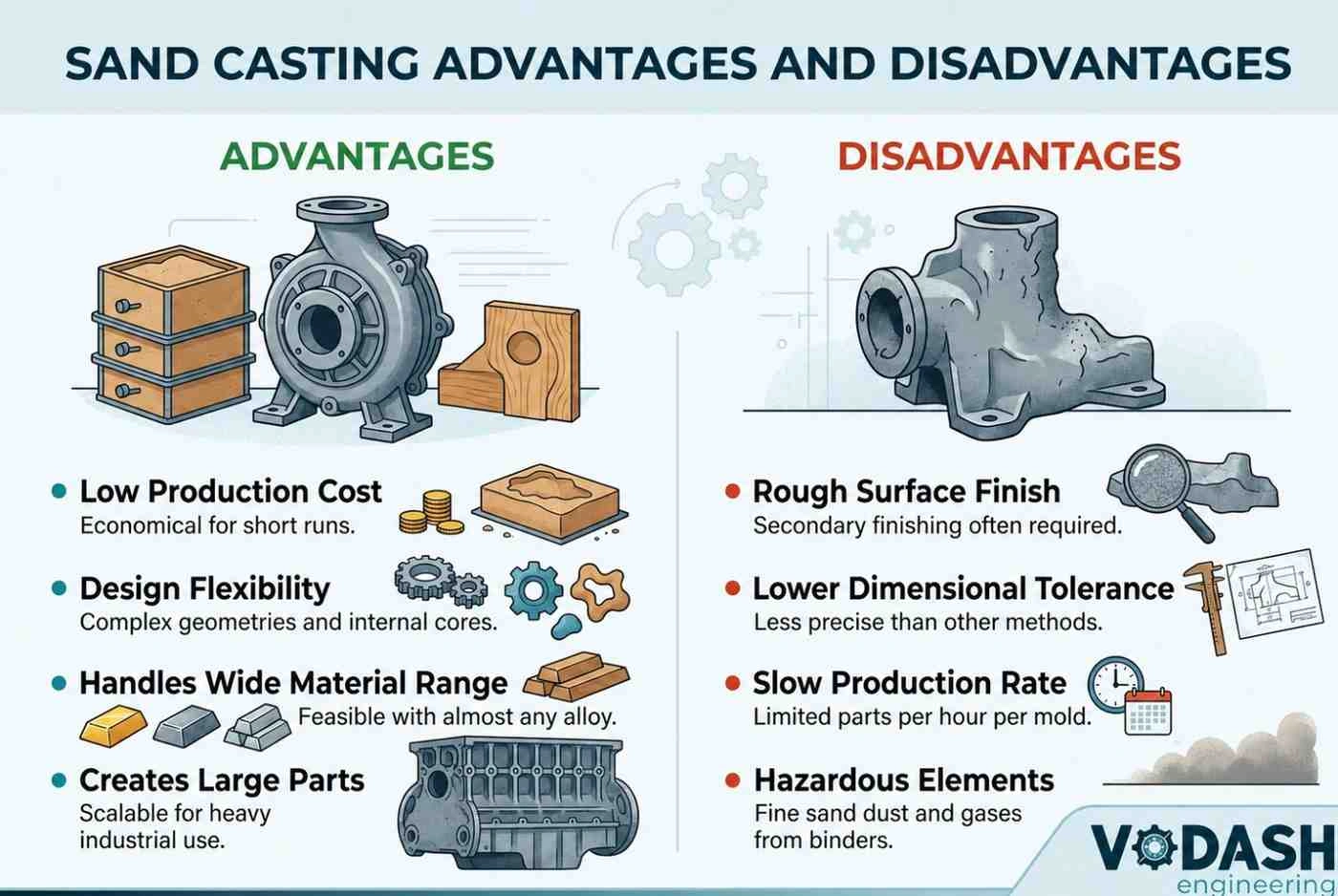
- Sand Casting is one of the most versatile and cost-effective casting methods
- It supports a wide range of metals and large component sizes
- The process is simple but may require post-processing
- It’s not ideal for high-precision or fine-detail parts
- Choosing the right method depends on your project goals
What is Sand Casting?
Sand Casting is a metal casting process where molten metal is poured into a mold made from specially prepared sand. Once the metal cools and solidifies, the mold is broken to retrieve the final product.
It’s one of the oldest casting methods still in use today and for good reason. The process is simple, adaptable, and capable of producing everything from small components to massive industrial parts.
This flexibility is what makes sand casting a go-to solution across industries.
Sand Casting Advantages
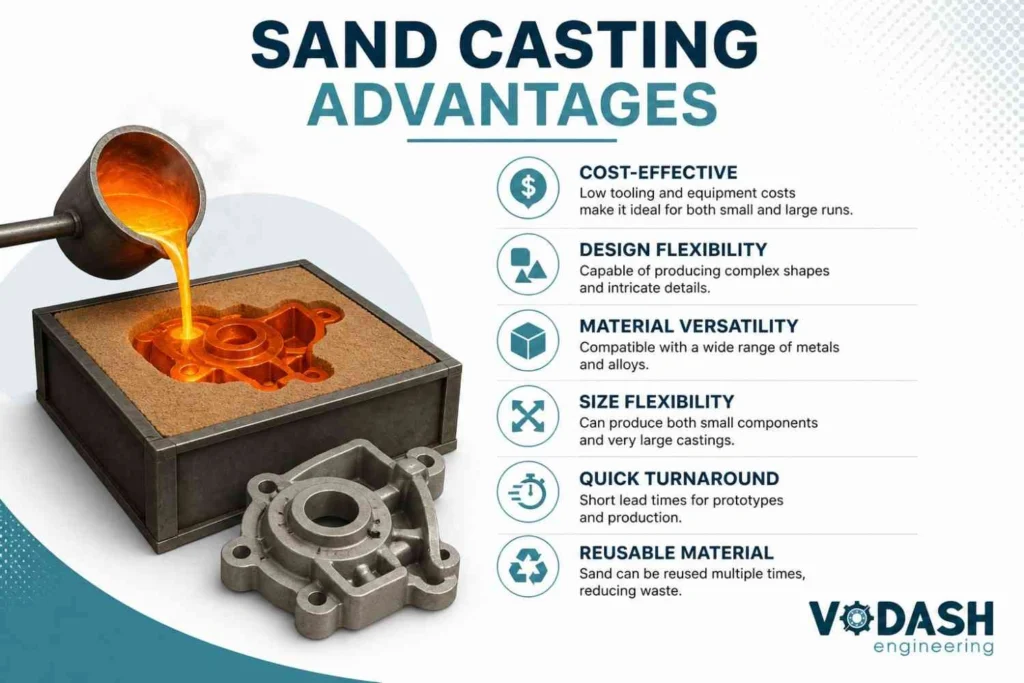
1. Cost-Effective Production
One of the biggest reasons manufacturers choose sand casting is affordability. Tooling costs are relatively low compared to other casting methods, making it ideal for both small batches and large-scale production.
2. Excellent Design Flexibility
Sand Casting allows for complex shapes and custom designs. Whether it’s internal cavities or irregular geometries, the process can handle it with ease.
3. Wide Range of Material Compatibility
From cast iron and steel to aluminum and bronze, sand casting supports a variety of ferrous and non-ferrous metals.
4. Suitable for Large Components
Need to manufacture heavy or oversized parts? Sand Casting Process handles large dimensions better than most other casting techniques.
5. Reusable and Eco-Friendly Sand
The sand used in molds can often be recycled and reused, reducing waste and making the process more environmentally friendly.
6. Simple Setup
Unlike highly automated methods, sand casting services doesn’t require complex machinery. This simplicity makes it accessible and adaptable for different production needs.
Sand Casting Disadvantages
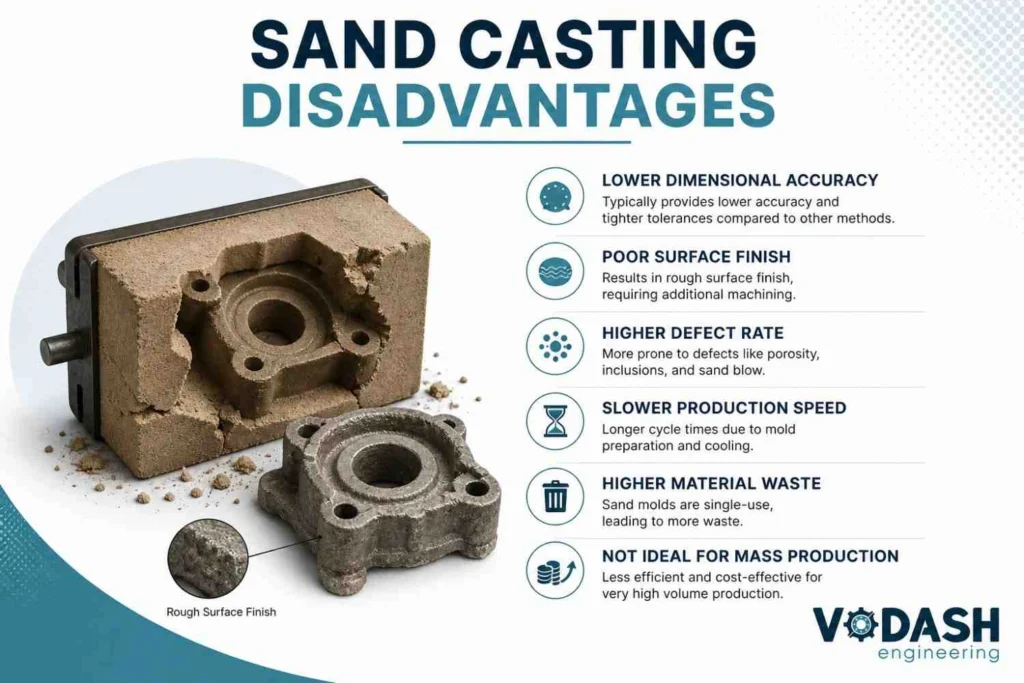
1. Rough Surface Finish
Castings produced through sand casting often have a coarse surface. Additional machining or finishing is usually required to achieve a smooth finish.
2. Lower Dimensional Accuracy
Compared to processes like die casting, sand casting offers less precision. This can be a limitation for parts that require tight tolerances.
3. Labor-Intensive Process
Many steps in sand casting involve manual work, which can increase labor costs and production time.
4. Slower Production Speed
Because each mold is typically single-use, the process is slower than high-speed casting methods like die casting.
5. Risk of Defects
Issues like porosity, shrinkage, and air pockets can occur if the process isn’t carefully controlled.
6. Limited Fine Detail
Very intricate or highly detailed components may not come out as cleanly as they would with precision casting methods.
When Should You Choose Sand Casting?
Sand Casting is the right option when:
- You need a cost-effective solution
- The part size is large or complex
- High precision machining services is not the top priority
- You’re working with diverse metal types
- Production volumes vary
If your project checks these boxes, sand casting is worth serious consideration.
Conclusion
Sand Casting continues to hold its place as a reliable and practical manufacturing process. Its affordability and versatility make it a strong choice for many industries, even in today’s advanced production landscape.
At Vodash Engineering, we believe the key is not just choosing a method, but choosing the right method for your specific needs. By weighing the advantages and disadvantages of sand casting, you can make smarter, more efficient production decisions.
Need expert guidance for your next casting project? Contact Us today and let’s build the right solution together.
Also Read: https://vodashcasting.com/blog/types-of-sand-casting-methods-uses/
FAQs
1. What are the main advantages of sand casting?
Sand casting is affordable, flexible in design, compatible with many metals, and suitable for large components.
2. What are the main disadvantages of sand casting?
It offers lower precision, rough surface finish, and may require additional machining and labor.
3. Is sand casting suitable for mass production?
Yes, but it’s slower compared to automated methods like die casting. It’s best for medium to large parts rather than high-speed production.
4. Which metals can be used in sand casting?
Common materials include cast iron, steel, aluminum, brass, and bronze.
5. How does sand casting compare to die casting?
Sand casting is more cost-effective and flexible, while die casting provides better accuracy and surface finish.