
Introduction
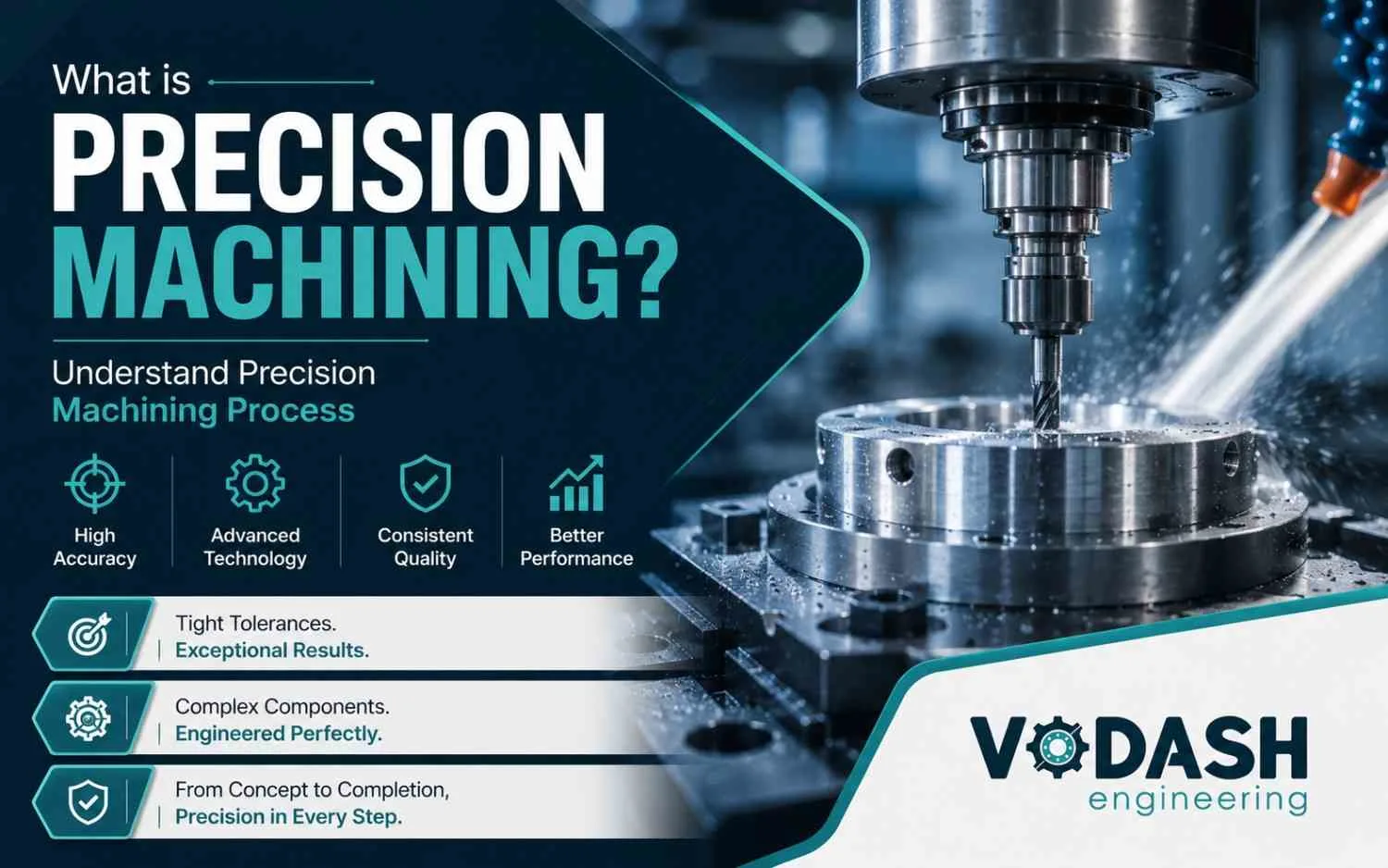
Precision Machining is a modern manufacturing process used to produce highly accurate and complex components with tight tolerances. Using advanced CNC (Computer Numerical Control) machines and specialized cutting tools, manufacturers can create parts that meet exact design specifications for various industrial applications.
Industries such as automotive, aerospace, medical, railway, oil & gas, electronics, and heavy engineering rely on precision machining to manufacture durable and high-performance components. The precision machining process ensures excellent surface finish, consistent quality, and reliable performance, making it one of the most important manufacturing technologies today.
Key Takeaways
- Precision Machining Services is a high-accuracy manufacturing process.
- CNC technology ensures consistent and repeatable production.
- Multiple machining operations work together to create finished components.
- Precision machining is widely used across automotive, aerospace, medical, and industrial sectors.
- Advanced technology continues to improve machining efficiency and product quality.
What is Precision Machining?
Precision Machining is a subtractive manufacturing process where material is removed from a workpiece to create a finished part with extremely accurate dimensions and tight tolerances.
The process is typically controlled by CNC machines that follow programmed instructions, ensuring repeatable and consistent production.
Key Features of Precision Machining
- High dimensional accuracy
- Tight tolerance control
- Smooth surface finish
- Excellent repeatability
- Suitable for complex designs
- Minimal material waste
What is the Precision Machining Process?
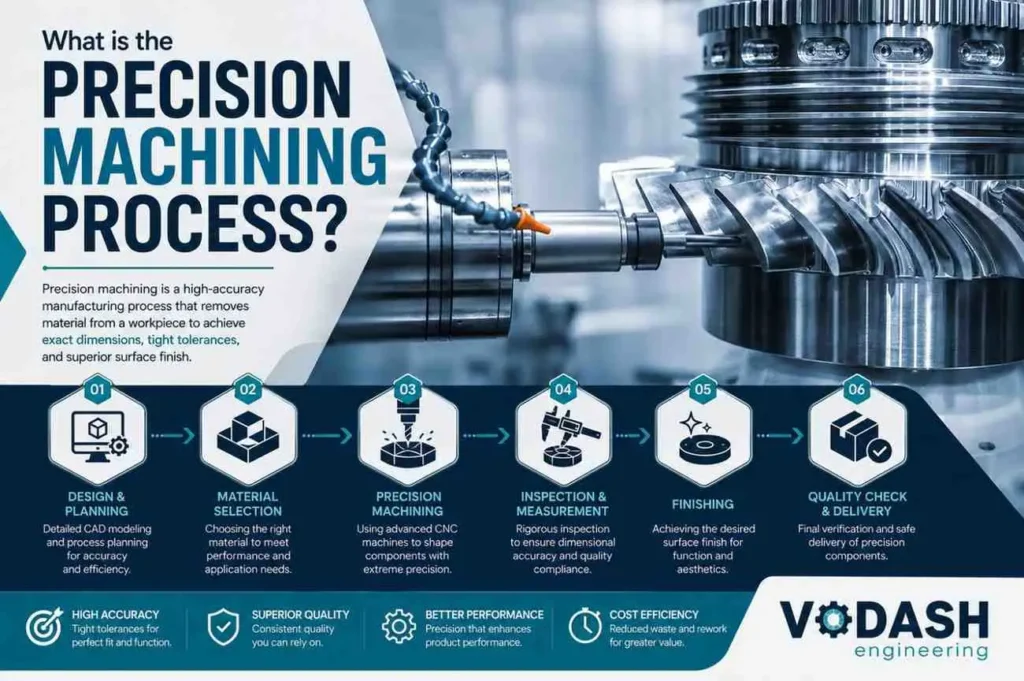
The precision machining process involves several carefully controlled stages that transform raw material into a finished component.
Step 1: Product Design and CAD Modeling
Engineers create a detailed digital model using CAD (Computer-Aided Design) software.
Benefits:
- Accurate Product Visualization
- Easy Design Modifications
- Better Production Planning
Step 2: Material Selection
The right material is selected based on the application’s strength, durability, and environmental requirements.
Common Materials Used
- Stainless Steel
- Carbon Steel
- Aluminum
- Brass
- Copper
- Titanium
- Engineering Plastics
Step 3: CNC Programming
The CAD design is converted into machine-readable instructions using CAM software.
Advantages:
- Automated operation
- High production consistency
- Reduced human error
Step 4: Machine Setup
The workpiece and cutting tools are installed and calibrated before machining begins.
Setup Includes:
- Tool selection
- Workpiece alignment
- Speed and feed adjustment
- Machine calibration
Step 5: Machining Operations
Various machining processes are performed to shape the component.
| Machining Process | Primary Function | Common Applications |
| CNC Turning | Rotates material while cutting | Shafts, Bushings |
| CNC Milling | Removes material using rotating tools | Machine Parts, Housings |
| Drilling | Creates precise holes | Flanges, Plates |
| Grinding | Improves surface finish | Precision Tools, Dies |
Step 6: Surface Finishing
Additional finishing processes improve the appearance and functionality of the component.
Common Finishing Methods
- Polishing
- Sandblasting
- Anodizing
- Electroplating
- Powder coating
Step 7: Quality Inspection
Each component undergoes strict quality checks to ensure it meets customer specifications.
Common Inspection Methods
- Dimensional inspection
- CMM (Coordinate Measuring Machine) testing
- Surface roughness testing
- Hardness testing
- Visual inspection
Advantages of Precision Machining
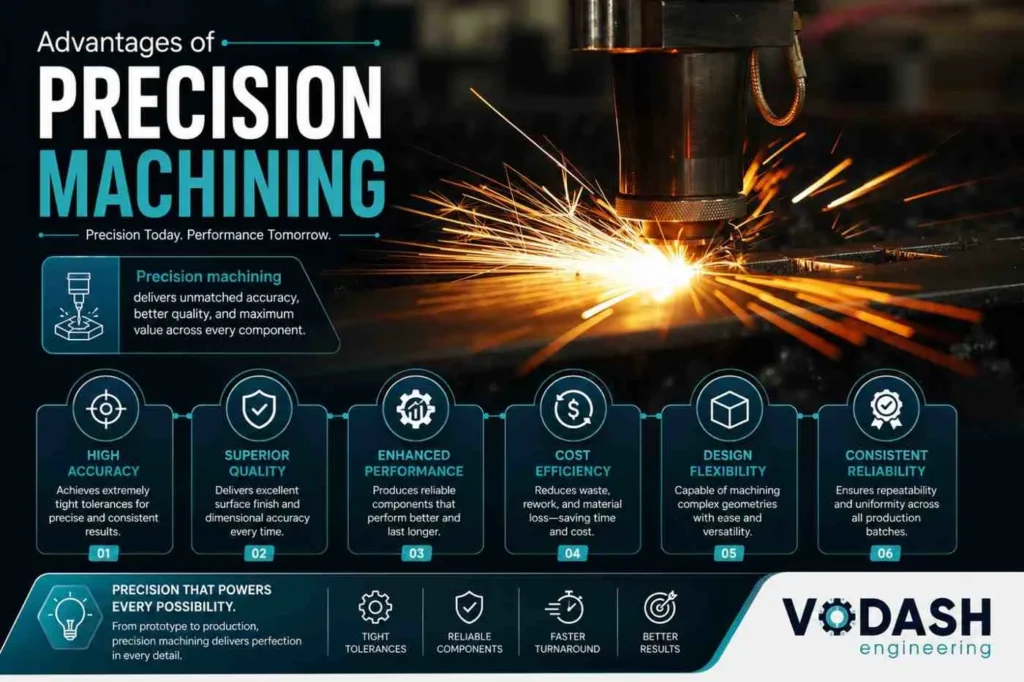
Precision machining offers several benefits over conventional manufacturing methods.
Key Benefits
- High accuracy and consistency
- Tight tolerance capability
- Superior surface finish
- Faster production cycles
- Reduced material waste
- Suitable for custom components
- Excellent repeatability
- Cost-effective for medium and large production runs
Industries That Use Precision Machining
Precision machined parts are essential across many industries.
| Industry | Common Components |
| Automotive | Engine Parts, Shafts |
| Aerospace | Turbine Components, Fittings |
| Medical | Surgical Instruments, Implants |
| Railway | Bushings, Connectors |
| Oil & Gas | Valves, Pump Parts |
| Industrial Machinery | Custom Machine Components |
Why Precision Machining is Important
Modern industries require components that perform reliably under demanding conditions. Precision machining ensures every part is manufactured with exact dimensions, helping improve product quality, assembly efficiency, and operational safety.
Manufacturers also benefit from lower production costs, reduced waste, and the ability to produce highly complex designs that would be difficult with traditional machining methods.
Future Trends in Precision Machining
The precision machining industry continues to evolve with advanced technologies.
Emerging Innovations
- AI-powered CNC systems
- Smart factory automation
- Multi-axis machining
- Robotic material handling
- Digital quality monitoring
- Sustainable manufacturing practices
These technologies are helping manufacturers improve productivity while maintaining exceptional quality standards.
Conclusion
Precision machining has become a cornerstone of modern manufacturing by delivering highly accurate, durable, and consistent components for a wide range of industries. With advanced CNC technology, automated production systems, and strict quality control, precision machining enables manufacturers to meet the growing demand for high-performance industrial parts while improving efficiency and reducing production costs.
Also Read : https://vodashcasting.com/blog/what-is-cnc-milling-machine-used-for/
FAQs
1. What is precision machining?
Precision machining is a manufacturing process that removes material from a workpiece to create highly accurate and dimensionally precise components using CNC machines.
2. What is the precision machining process?
The process includes product design, material selection, CNC programming, machine setup, machining operations, finishing, and quality inspection.
3. What materials are commonly used in precision machining?
Common materials include stainless steel, aluminum, brass, carbon steel, titanium, copper, and engineering plastics.
4. Which industries use precision machining?
Automotive, aerospace, medical, railway, oil & gas, electronics, and industrial machinery industries widely use precision machined components.
5. What are the advantages of precision machining?
Precision machining offers high accuracy, tight tolerances, excellent surface finish, reduced material waste, faster production, and consistent product quality.